In short: The Philippines uses distinct plate formats for cars, motorcycles, and temporary registrations. Car plates pair three letters with four digits, like ABC 1234. This guide decodes every format, plus coding days and old plates.
📌 Key Takeaways
On this page:
- Current Philippine Plate Formats
- Temporary Plates and Conduction Numbers
- Number Coding Schedule
- Old Green Plates vs New White Plates
- The “No Plate, No Travel” Policy
- FAQs
Current Philippine Plate Formats
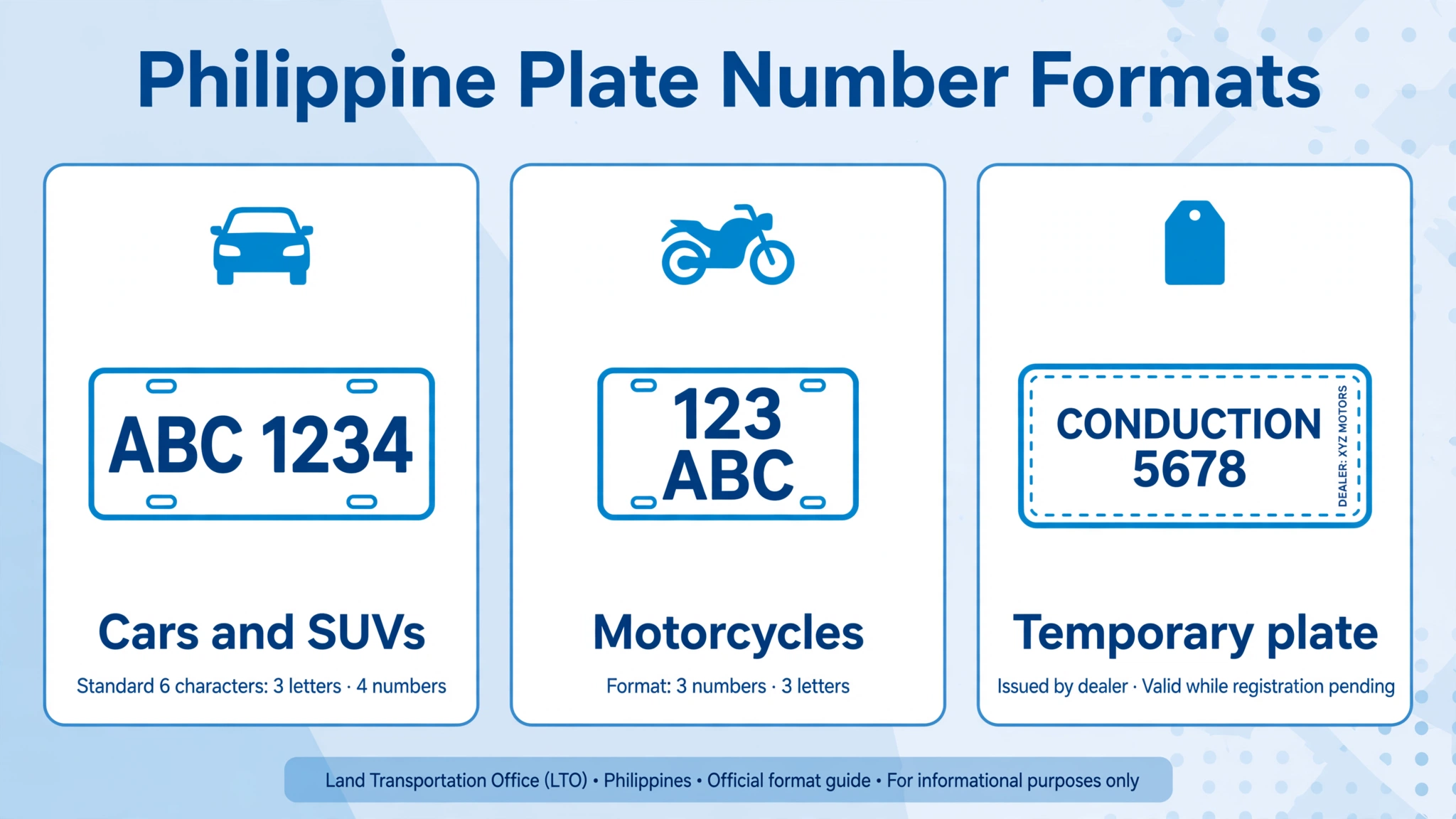
The LTO issues standardized plates with formats assigned by vehicle type. Private cars, motorcycles, and public utility vehicles each look different. Learning your format helps you spot errors on new plates.
Vehicle type | Format | Example |
Private car / SUV | 3 letters + 4 digits | ABC 1234 |
Motorcycle | 3 digits + 3 letters | 123 ABC |
Public utility vehicle | 3 letters + 4 digits | ABC 1234 |
Motorcycle plates also appear in the reverse pattern on some series. The LTO’s newer motorcycle plates use larger, more readable characters. Always match your physical plate against your CR before driving daily.
Temporary Plates and Conduction Numbers
New vehicles wait weeks or months for their permanent plates. During that wait, the conduction number serves as the temporary identifier. Dealers print it on the temporary plate you display every day.
Temporary plates also follow a commonly published color scheme nationwide. Character colors signal the vehicle’s registration class at a glance. Confirm the current scheme with the LTO, since designs evolve.
Character color | Vehicle class |
Black | Private vehicles |
Green | Electric and hybrid vehicles |
Red | Government vehicles |
Blue | Diplomatic vehicles |
Number Coding Schedule
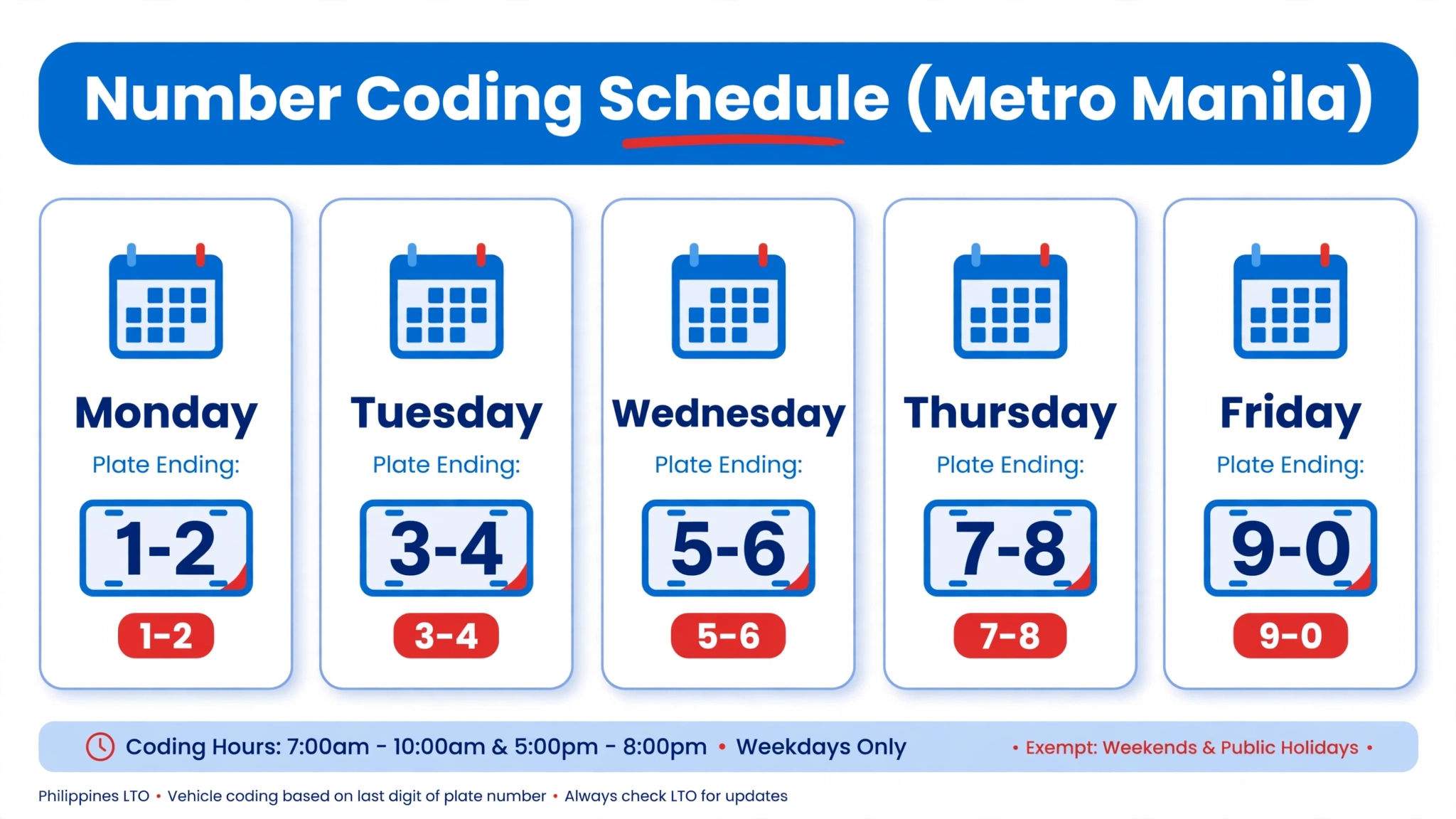
Metro Manila enforces number coding on weekdays to ease traffic congestion. Your plate’s last digit decides which weekday you cannot drive. The scheme below reflects the commonly published Metro Manila coding schedule.
Coding day | Plate endings |
Monday | 1 and 2 |
Tuesday | 3 and 4 |
Wednesday | 5 and 6 |
Thursday | 7 and 8 |
Friday | 9 and 0 |
Old Green Plates vs New White Plates
The LTO replaced old green plates with standardized white plates nationwide. The change aimed to improve readability and unify plate security features. Replacement plates under the program continue releasing in batches today.
Feature | Old plates | New plates |
Character color | Green | Black |
Readability | Lower at night | Higher reflectivity |
Security | Basic stamping | Modern security features |
Status | Being replaced | Current standard |
If you still carry green plates, check the replacement inquiry tools. Our plate replacement guide walks through the claiming process step by step.
The “No Plate, No Travel” Policy
The LTO has historically enforced a no-plate, no-travel policy during crackdowns. Under this policy, vehicles without plates or conduction numbers face apprehension. Enforcement intensity has varied across different periods and regions nationwide.
Always display either your permanent plate or a proper temporary plate. This simple habit keeps every trip compliant with LTO rules.
FAQs
📚 Keep Reading
Confused about a plate format you saw on the road? Please share this helpful guide with your fellow drivers today. Bookmark this page for quick reference before your next LTO visit.