LTO Backlog and Replacement Plates: Palit Plaka Guide
Waiting for your LTO plate number release or replacing an old license plate can be confusing, especially if your vehicle is affected by the plate backlog. This guide explains how the Land Transportation Office (LTO) handles replacement plates under the Palit Plaka Program.
You’ll learn who qualifies, the required documents, how to check your plate status, and the steps to claim your replacement plate without unnecessary delays.
What Are Backlog Plates and Why the Delay
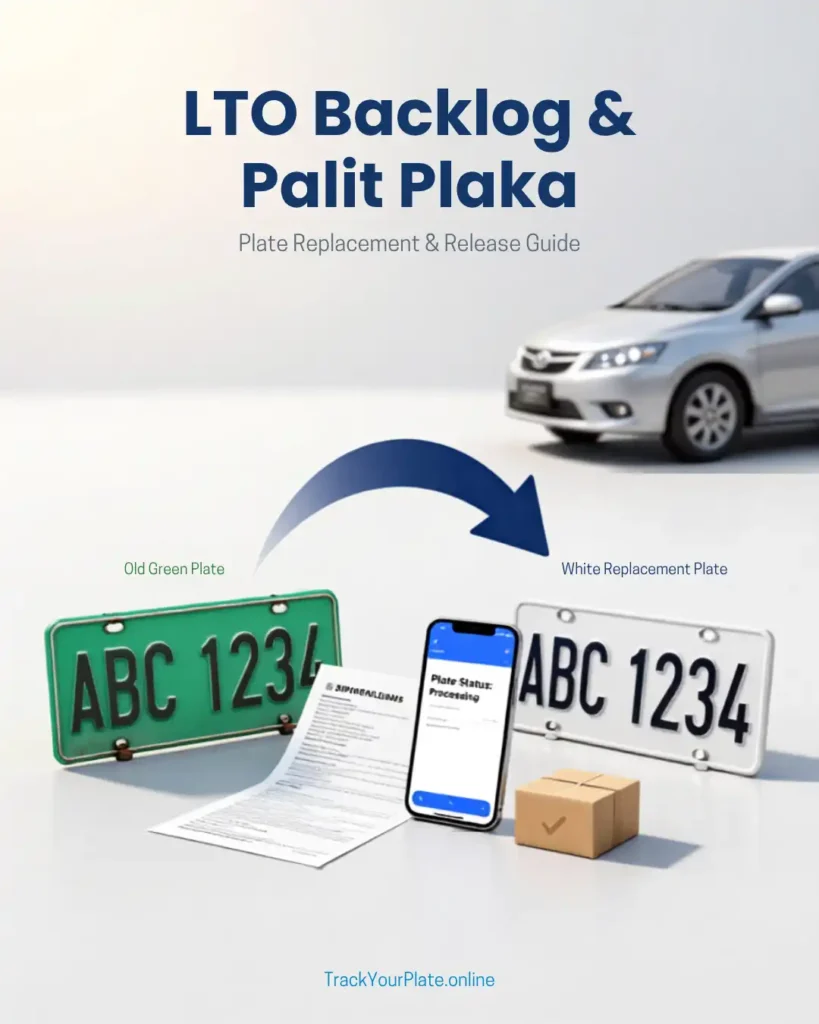
Backlog plates are license plates that have not yet been issued to vehicle owners even after completing vehicle registration with the Land Transportation Office (LTO). If your LTO plate number release is still pending, your vehicle may be part of this backlog. During this period, many owners use an authorized temporary plate until the official plate becomes available.
The backlog mainly happened because plate production could not keep up with the growing number of newly registered vehicles. Production delays, procurement issues, and the large volume of pending registrations created a nationwide backlog that took years to address. As a result, many vehicle owners waited much longer than expected for their official license plates.
Today, the LTO continues releasing pending plates through regular distribution and the Palit Plaka Program for eligible replacement cases. Vehicle owners can check the status of their LTO plate number release using their MV File Number or other registration details through official LTO channels before visiting the releasing office.
Green to White Plate Replacement Process
If your vehicle still has a green license plate, you may need to replace it with the newer white plate issued by the Land Transportation Office (LTO). The process is generally straightforward, but the exact requirements may vary depending on your vehicle registration and the availability of replacement plates.
Before starting the process, check the latest LTO guidelines to make sure you have the correct documents and understand any updated requirements. This can help prevent delays and avoid multiple trips to the LTO office.
Green to White Plate Replacement Process
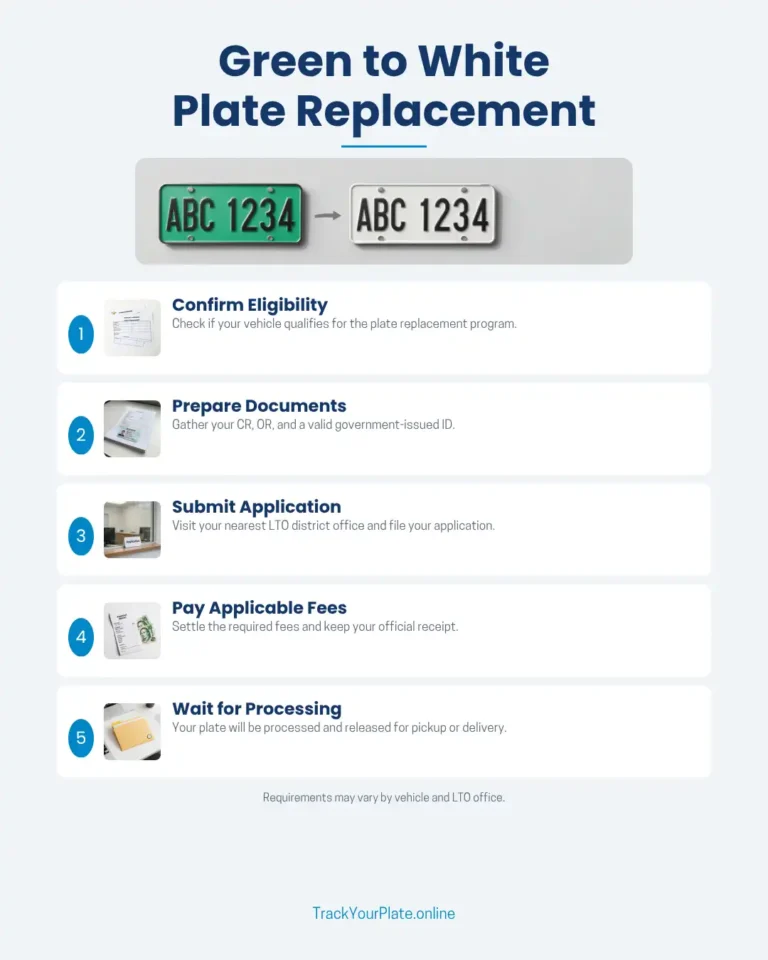
If your vehicle still has a green license plate, you may need to replace it with the newer white plate issued by the Land Transportation Office (LTO). Before visiting an LTO office, check your LTO plate number release status to confirm whether your replacement plate is already available.
This can help you avoid unnecessary trips and ensure you have the correct documents before starting the replacement process.
Confirm Your Eligibility
Contact your local LTO office or check the latest LTO announcements to confirm that your vehicle qualifies for a green-to-white plate replacement. Eligibility may depend on your vehicle records and the availability of replacement plates.
Prepare the Required Documents
Collect all required documents before visiting the LTO. These usually include your Certificate of Registration (CR), Official Receipt (OR), a valid government-issued ID, and any additional documents requested by the office. If someone else will claim the plate on your behalf, they may also need an authorization letter and a valid ID.
Submit Your Application
Visit the assigned LTO office and submit your documents for verification. The LTO staff will review your records to make sure your vehicle information matches their system before processing your request.
Pay the Required Fees
If a replacement or processing fee applies, complete the payment at the authorized LTO payment counter. Keep your Official Receipt (OR), as you may need it when claiming your replacement plate.
Wait for Processing
After your application is accepted, the LTO will process your request. The waiting time may vary depending on plate availability and the workload of the issuing office.
Claim Your White Plate
Once your replacement plate is ready, you can claim it from the LTO office. If your branch offers a courier service, you may also have the option to receive your plate at your registered address.
Before visiting the LTO, check the latest requirements and announcements to avoid delays and make sure you have all the necessary documents.
Frequently Asked Questions
Final Thoughts
Understanding the LTO plate number release process makes it easier to deal with backlog and replacement plate concerns. Whether you are waiting for a delayed license plate or applying through the Palit Plaka Program, following the correct Land Transportation Office (LTO) requirements can help you avoid unnecessary delays and repeat visits.
Before taking any action, verify your plate status, prepare the required documents, and follow the latest LTO guidelines. Staying informed and using official procedures is the best way to receive your replacement or backlog plate as smoothly as possible.